

Vitamin B12 stands out as an extraordinary nutrient with distinctive characteristics. It is the sole vitamin containing a metal ion and relies solely on external sources for our daily intake. Its versatility extends to a wide range of functions, making it a true powerhouse for our health. Without sufficient B12, disorders affecting the cardiovascular, neural, and psychological systems can emerge.
In this series of articles, we aim to present the topics in a simple and accessible manner. Here, we strive to provide a comprehensive understanding of this extraordinary vitamin and its significance for overall health and well-being.
Join Weekly Health Newsletter
Every week, I will share with you information about Natural Health, Diet, Exercise, Yoga & Wellness.
INTRODUCTION
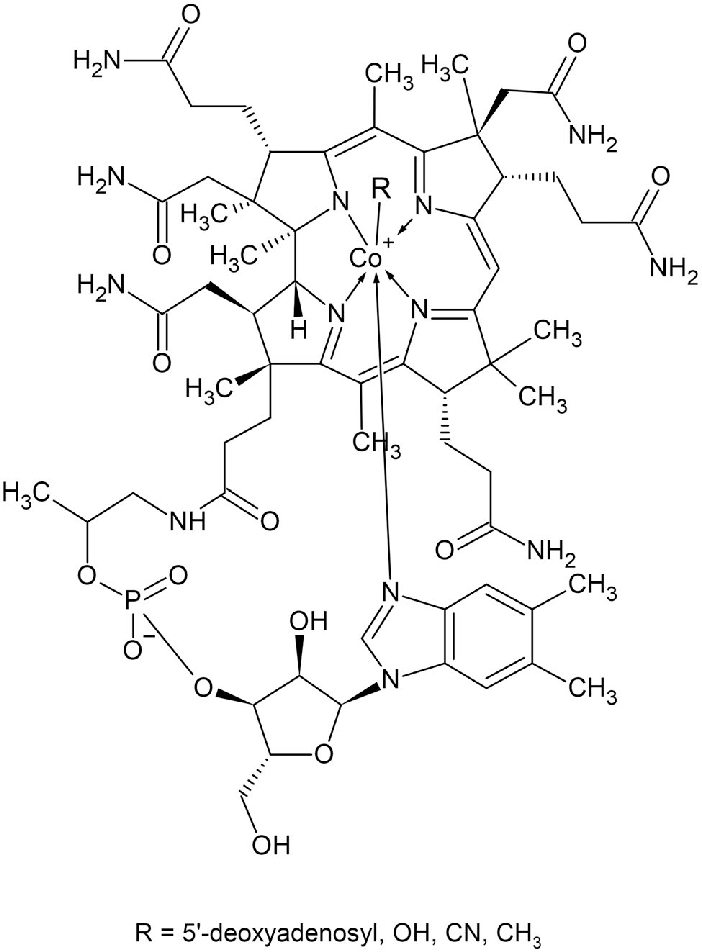
Vitamin B12 is a part of a group of compounds called cobalamins. They share similarities in their structure and can serve as substitutes of B12 in its absence. Hence, they are also termed as vitamers of B12.
Some examples are adenosylcobalamin, hydroxocobalamin, and cyanocobalamin. Methylcobalamin & 5-deoxyadenosylcobalamin are metabolically active forms in humans, but hydroxycobalamin & cyanocobalamin can also be used after being converted into the former forms.
Notably, Vitamin B12 is the only vitamin to contain a metal ion. It is present as cobalt-corrin complex which gives the compound its characteristic deep red color. The red crystalline vitamin forms a red solution when dissolved in water.
It is the most chemically complex vitamin, and it can’t be synthesized by our body. This means the only source of the vitamin is from either food or supplements.
METHODS OF ABSORPTION
There are two ways for absorption of Vitamin B12. The first one is by passive absorption due to a difference in its concentration between the lumen and the cells of the intestine.
The other way is via active transport with the help of protein carriers. Vitamin B12 is usually bound to a protein in the foods we eat. So, the first step is dissociating the food-bound B12 with the help of HCl (stomach acid) and pepsin (protease) in the stomach.
The freed B12 now binds to a cobalamin-binding protein secreted by the salivary glands & the gastric mucosa (moist inner lining of stomach). When the partially digested chyme enters the small intestine, the protein-bound B12 is attacked by pancreatic proteases. This results in the separation of B12 from the protein.
Now, B12 forms a complex with intrinsic factor which was secreted by the parietal cells of stomach. The intrinsic factor has two functions; to assist the vitamin’s absorption & to protect it from catabolism by intestinal bacteria. This B12-IF complex can be absorbed by enterocytes (cells lining the intestine) of distal ileum via receptor-mediated endocytosis.
STORAGE & EXCRETION
Around 2-5 mg of vitamin B12 is found in adults. Most of it is stored in the liver. As this vitamin is stored in substantial amounts in comparison to its utilization rate, the reservoir usually takes 3-5 years to get exhausted.
A part of it is secreted in the bile, which is then recycled via enterohepatic circulation. That is, the vitamin is secreted from liver into bile, which enters the small intestine, gets absorbed by enterocytes, and transported back to the liver. This process is not completely efficient and results in a minor loss the vitamin.
Another mode of excretion is by urine. When there is an excess B12 in the blood, it gets filtered by kidneys and excreted through urine.
FUNCTIONS
Given below are the diverse functions of Vitamin B12:
- Being a part of Vitamin Bs, it is involved in the metabolism of proteins, fats, and carbohydrates.
- It also has a role in erythropoiesis or red blood cell formation.
- It is required for DNA & RNA synthesis and is important for the development and maturation of red blood cells.
- Also, for proper cell division, growth and repair, an adequate amount of vitamin B12 is essential.
- It is involved in synthesis of myelin. Myelin is found in the long axonal region of a neuron. It facilitates fast impulse transmission and acts as a protective layer.
- Adequate B12 levels are also associated with good cardiovascular and mental health.
RECOMMENDED INTAKE
Vitamin B12 recommended intake values vary with age and gender. They are provided in the Dietary Reference Intakes (DRIs) developed by the Food and Nutrition Board (FNB) at the National Academies of Sciences, Engineering, and Medicine.
Adequate Intake (AI) : set for recommended intake for infants 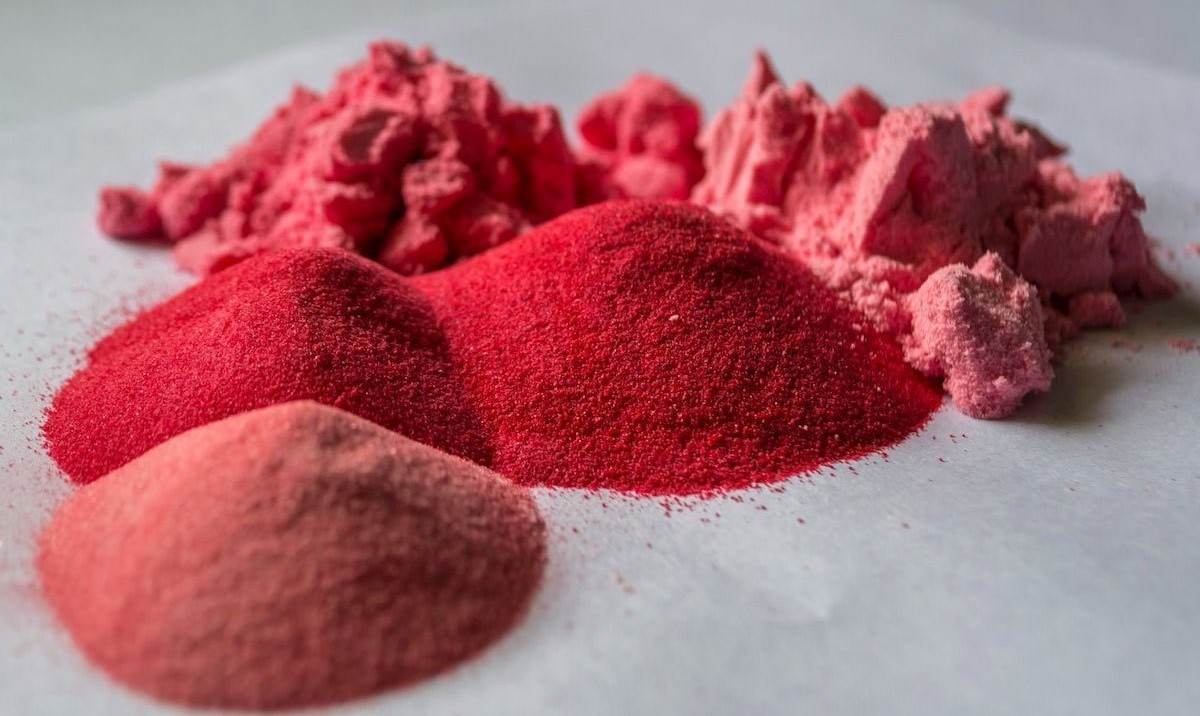 | ||
|---|---|---|
0-6 months | 0.4 μg/day | ≈0.05 μg/kg |
7-12 months | 0.5 μg/day | ≈0.05 μg/kg |
Recommended Dietary Allowance (RDA) : measures an average daily intake that is sufficient to meet the nutrient requirements of nearly all healthy individuals. | ||
|---|---|---|
1-3 yrs | For children | 0.9 μg/day |
4-8 yrs | For children | 1.2 μg/day |
9-13 yrs | For boys | 1.8 μg/day |
For girls | ||
14-18 yrs | For boys | 2.4 μg/day |
For girls | ||
For pregnancy | 2.6 μg/day | |
For lactation | 2.8 μg/day | |
19-30 yrs | For men | 2.4 μg/day |
For women | ||
For pregnancy | 2.6 μg/day | |
For lactation | 2.8 μg/day | |
31-50 yrs | For men | 2.4 μg/day |
For women | ||
For pregnancy | 2.6 μg/day | |
For lactation | 2.8 μg/day | |
51-70 yrs | For men | 2.4 μg/day |
For women | ||
>70 yrs | For men | 2.4 μg/day |
For women | ||
Estimated Average Requirement (EAR) measures an average daily intake that meets the requirements of 50% of healthy individuals. | ||
|---|---|---|
1-3 yrs | For children | 0.7 μg/day |
4-8 yrs | For children | 1 μg/day |
9-13 yrs | For boys | 1.5 μg/day |
For girls | ||
14-18 yrs | For boys | 2 μg/day |
For girls | ||
For pregnancy | 2.2 μg/day | |
For lactation | 2.4 μg/day | |
19-30 yrs | For men | 2 μg/day |
For women | ||
For pregnancy | 2.2 μg/day | |
For lactation | 2.4 μg/day | |
31-50 yrs | For men | 2 μg/day |
For women | ||
For pregnancy | 2.2 μg/day | |
For lactation | 2.4 μg/day | |
51-70 yrs | For men | 2 μg/day |
For women | ||
>70 yrs | For men | 2 μg/day |
For women | ||
Institute of Medicine (US) Standing Committee on the Scientific Evaluation of Dietary Reference Intakes and its Panel on Folate, Other B Vitamins, and Choline. Dietary Reference Intakes for Thiamin, Riboflavin, Niacin, Vitamin B6, Folate, Vitamin B12, Pantothenic Acid, Biotin, and Choline. Washington (DC): National Academies Press (US); 1998. 9, Vitamin B12. Available from: https://www.ncbi.nlm.nih.gov/books/NBK114302/
Institute of Medicine (1998). "Vitamin B12". Dietary Reference Intakes for Thiamin, Riboflavin, Niacin, Vitamin B6, Folate, Vitamin B12, Pantothenic Acid, Biotin, and Choline. Washington, DC: The National Academies Press. pp. 306–356. ISBN 978-0-309-06554-2.
Institute of Medicine, Food and Nutrition Board. Dietary Reference Intakes for Thiamin, Riboflavin, Niacin, Vitamin B(6), Folate, Vitamin B(12), Pantothenic Acid, Biotin, and Choline. Washington, DC: National Academies Press; 1998.
Vitamin B12-Fact Sheet for Medical Professionals. National Institutes of Health (NHI). Retrieved from https://ods.od.nih.gov/factsheets/VitaminB12-HealthProfessional/#en1
Join Weekly Health Newsletter
Every week, I will share with you information about Natural Health, Diet, Exercise, Yoga & Wellness.
0 comments