

For more than two decades, Alzheimer’s research has revolved around one protein: amyloid. The first disease-modifying drugs clear amyloid plaques from the brain, and medical students like me learn the “amyloid cascade” as the organising idea of the disease.
This July, at the Alzheimer’s Association International Conference (AAIC) in London, a different protein took the spotlight. Prof. Cath Mummery of UCL and University College London Hospitals presented CELIA, a Phase 2 trial of an experimental drug called diranersen, which lowers the production of tau, the protein that forms tangles inside struggling neurons.
Then the coverage split. UCL described encouraging results in slowing cognitive decline. Trade coverage reported that the trial missed its Phase 2 primary endpoint, and another headline called the data strong but the analysts skeptical. So is this tau Alzheimer’s treatment a breakthrough or a near miss? I will argue it is a bit of both, and that understanding why is one of the most useful lessons in reading clinical trials.
Join Weekly Health Newsletter
Every week, I will share with you information about Natural Health, Diet, Exercise, Yoga & Wellness.
WHY AMYLOID WASN'T THE WHOLE STORY?
In Brief about Amyloid
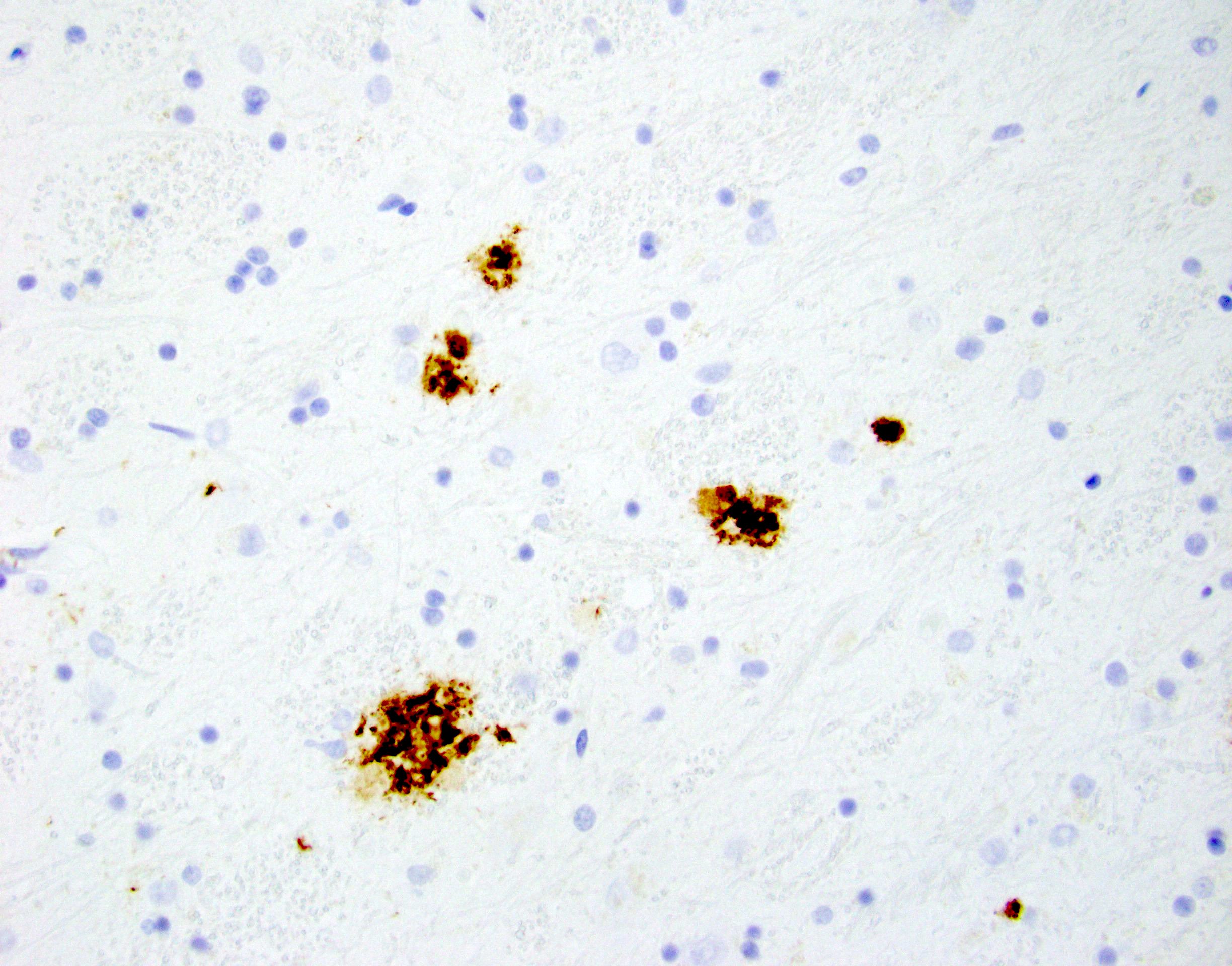
Amyloid Plaques
Under the microscope, Alzheimer’s disease has two classic hallmarks: plaques of amyloid-beta outside neurons, and neurofibrillary tangles of tau inside them. The amyloid hypothesis proposed that amyloid build-up is the initiating event, with tangles, inflammation and neuronal loss following downstream.
That idea guided drug development for decades and eventually produced antibodies such as lecanemab (Leqembi) and donanemab (Kisunla). They remove plaques and modestly slow decline in early disease. Long-term, real-world lecanemab data were presented at the AD/PD congress in March 2026, a sign that these drugs are now part of clinical practice.
“Modestly” is the key word. Clearing plaques does not bring back neurons that have already died. The antibodies also require careful MRI monitoring for side effects such as brain swelling or microbleeds, known as amyloid-related imaging abnormalities (ARIA).
What Tau Does, and Why tangles matter
In a healthy neuron, tau helps stabilise microtubules, the internal tracks that carry nutrients and signalling molecules along the axon. In Alzheimer’s disease, tau becomes abnormally modified, detaches from those tracks and clumps into tangles. Transport fails, neurons lose their ability to communicate with each other, and eventually they die.
Pathologists describe a fairly predictable spread of tangles through the brain, called Braak staging. Researchers also describe tau as more closely associated than amyloid with worsening symptoms and cognitive decline. That is exactly why it is such an attractive drug target.
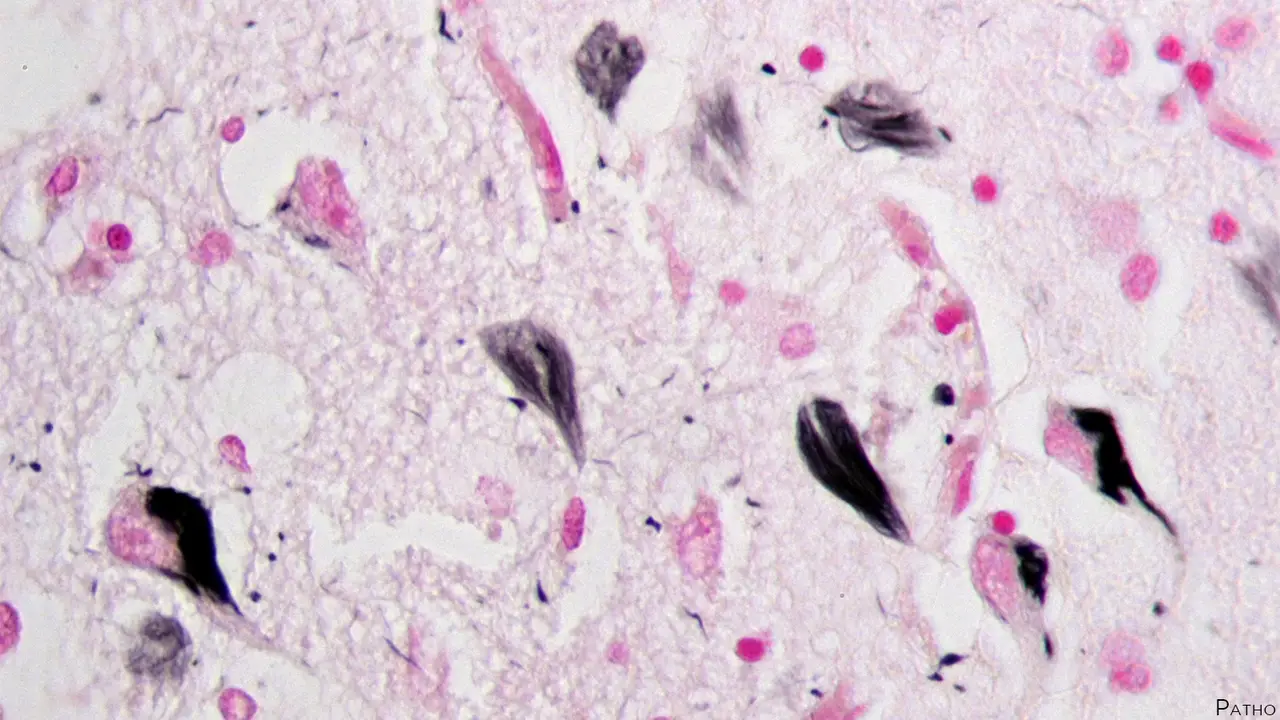
Tau Tangles
From the “age of amyloid” to the “time of tau”
Coverage of AAIC 2026 captured the mood: the “age of amyloid” is being joined by a “time of tau.” The word “joined” matters. Nobody is proposing to abandon amyloid. A reasonable reading is that Alzheimer’s is a multi-protein disease, and that future treatment may need to address more than one target at once.
WAYS TO ATTACK TAU
Strategy one: reduced production with gene silencing
Diranersen (also called BIIB080) is an antisense oligonucleotide: a short, synthetic strand of genetic material designed to bind the messenger RNA copied from the MAPT gene, which codes for tau. Binding marks that RNA for destruction, so less tau protein is made. UCL describes this as a “gene silencing” approach, and says CELIA is the first time it has been tried in Alzheimer’s disease. BioWorld notes that the drug was originally discovered by Ionis Pharmaceuticals and is now developed by Biogen.
The logic is simple: if too much tau is the problem, turn down the tap. Antisense drugs are already used in other neurological conditions, such as spinal muscular atrophy, so the technology is not new to neurology.
Strategy two: stop tau from clumping
A different approach is to stop tau proteins sticking together in the first place. RI-AG03 is designed to do exactly that, and UCL and UCLH researchers have reported early Phase I results. Prof. Mummery was careful to stress that these are very early findings that must be confirmed in much larger studies.
Strategy three: antibodies against tau
Antibodies can be engineered to bind tau directly. Bristol Myers Squibb’s BMS-986446 (formerly PRX005) targets a key region within the microtubule-binding domain of tau. According to its partner Prothena, the Phase 2 TargetTau-1 trial in early Alzheimer’s is expected to complete in the first half of 2027. Antibodies are thought to work by neutralising tau outside cells, where it may help the pathology spread from one neuron to the next.
INSIDE THE CELIA TRIAL
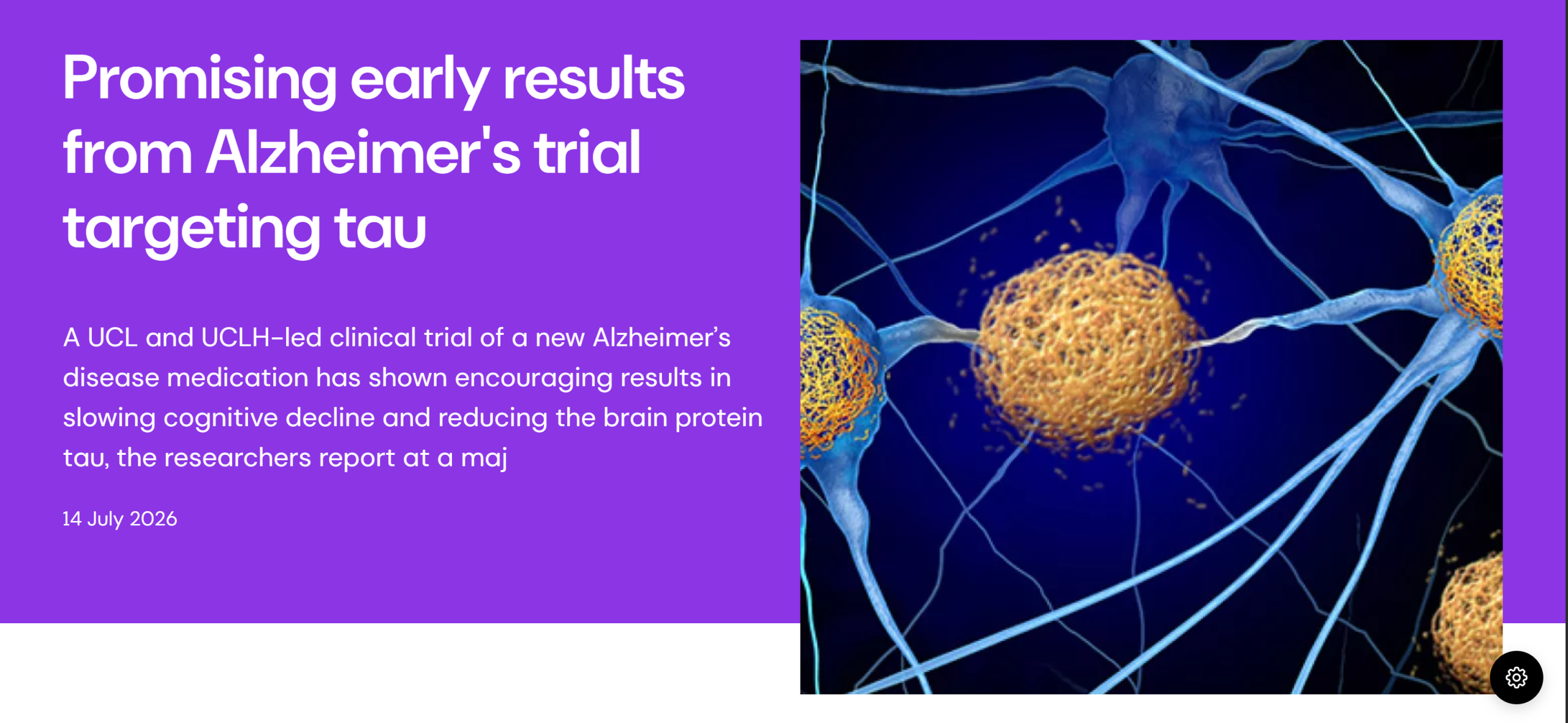
CELIA was a Phase 2 trial sponsored by Biogen. It enrolled 416 people with mild cognitive impairment due to Alzheimer’s disease or mild Alzheimer’s dementia, so the participants all had early-stage disease. The drug was tested at multiple doses, with results assessed at 18 months. Prof. Mummery presented the findings in London on July 14.
What the researchers reported
The headline results fall into three groups.
- Biomarkers. Diranersen reduced total tau in the cerebrospinal fluid (CSF) by 50 to 65%. The researchers say it is the first tau-directed therapy in a Phase 2 study to reduce both CSF tau and tau pathology in the brain on PET scans across all studied doses.
- Cognition. UCLH’s summary reports slower cognitive decline, citing cognitive scales that include the ADAS-Cog (a clinician-administered test covering memory, language and practical skills) and the Mini-Mental State Examination, or MMSE (a 30-point screening test). I have deliberately left out the percentage figures. They only mean something when read against the placebo group in the full dataset.
- Interpretation. Prof. Mummery described CELIA as establishing proof of concept that reducing tau may slow progression, and said the size of the tau reduction and cognitive benefit is among the most compelling reported in Alzheimer’s drug development.
CELIA's Predecessor
CELIA built on earlier work. A 46-patient trial of a tau-silencing antisense drug known as MAPTRx compared three doses with placebo. It found the drug safe, well tolerated and biologically active: tau in the CSF fell by more than 50% after 24 weeks at the highest dose.
But that early trial could not show that patients actually got better. It was designed to test safety and target engagement, not clinical benefit. CELIA was the first large test of whether lowering tau changes how patients do.
Breakthrough or Near Miss?
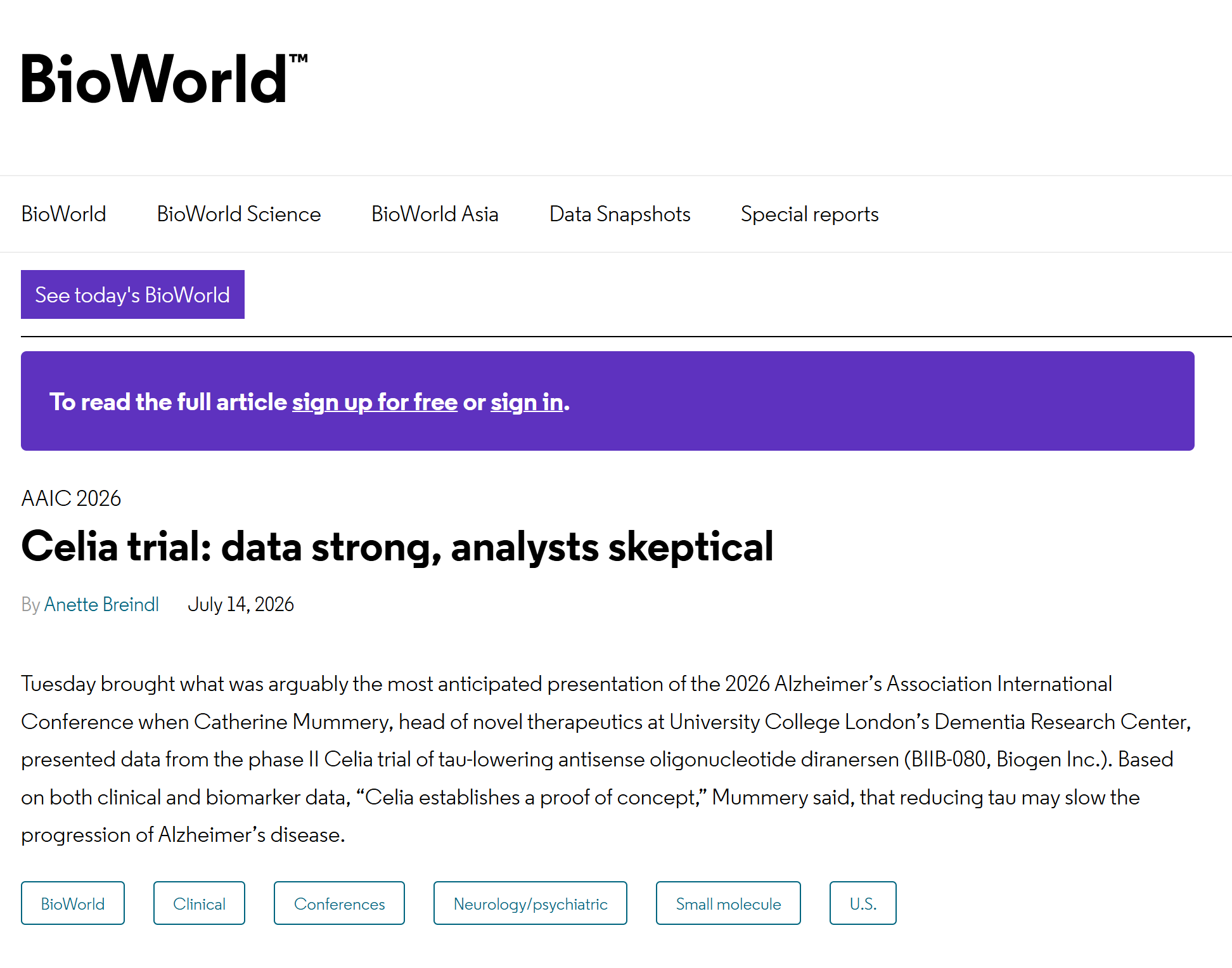
The press materials from UCL and UCLH emphasise encouraging results, with efficacy across all studied doses at 18 months. BioWorld’s coverage tells a more complicated story: Biogen is moving diranersen into registrational trials even though the drug missed its Phase 2 primary endpoint. A separate BioWorld headline summed up the mood: data strong, analysts skeptical.
Both accounts can be true at once. To see how, we need to look at how trials are judged.
Why a trial can “miss” and still look promising
Before a trial is unblinded, investigators pre-specify one primary endpoint, the single outcome on which success is formally judged. This matters because testing many outcomes makes it likely that something will look positive by chance, a problem statisticians call multiplicity. Secondary endpoints and biomarkers are informative, but they are generally treated as hypothesis-generating rather than confirmatory.
So if the primary endpoint is missed, the trial is formally negative, even when secondary measures lean in the right direction. At the same time, Phase 2 trials are usually small and often underpowered for clinical outcomes. A consistent pattern across several measures, a clear biological effect and a dose-related signal can reasonably justify a larger Phase 3 trial. That appears to be the reasoning here, though I could not confirm what the primary endpoint was or by how much it was missed.
Biomarkers are not outcomes
Cutting CSF tau by half proves that the drug engages its target. It does not prove that patients feel or function better. Alzheimer’s research has a long history of treatments that moved a biomarker without helping patients, which is why regulators and clinicians insist on clinical outcomes.
The PET result is more reassuring than a fluid measurement alone, because it reflects pathology in the brain itself. Even so, it remains a surrogate marker until a Phase 3 trial shows it translates into real clinical benefit.
Conflicts of Interest
Biogen funded CELIA, and much of the strongly positive language comes from the lead investigator. That is not an accusation of bias. Sponsors and investigators are naturally enthusiastic, and Prof. Mummery herself framed the result as proof of concept, not proof of efficacy. But it is a reason to give weight to independent analysts, and to wait for the full peer-reviewed data.
The Verdict
CELIA shows strong biology, a formally missed primary endpoint and encouraging but unproven clinical signals. That makes it a genuine proof of concept for tau lowering, and not yet evidence that patients benefit.
WHAT HAPPENS NEXT
Biogen plans to move diranersen into Phase 3 testing, and BioWorld describes the next step as registrational trials in early Alzheimer’s disease.
Phase 3 trials are designed to deliver the definitive answer. They typically enrol far more participants than Phase 2, often well over a thousand. They compare the drug with placebo on a pre-specified clinical primary endpoint over a long period, while closely tracking safety. Only if that succeeds can regulators consider approval.
Between recruitment, 18 months or more of treatment, analysis and regulatory review, we are realistically talking about years, not months. Diranersen is an investigational drug and is not available outside clinical trials. For patients and families, the sensible takeaway is cautious hope, not a reason to change current care.
CONCLUSION
Amyloid-targeting drugs opened the door to disease modification, but tau is more closely tied to symptoms, so it is the next major target. Researchers are attacking tau by reducing its production, blocking clumping and using antibodies.
In the Phase 2 CELIA trial of 416 people, diranersen cut CSF tau by 50 to 65% and also reduced tau on PET. UCL stresses encouraging efficacy, while trade reports say the primary endpoint was missed and analysts are skeptical. A missed primary endpoint with positive secondary and biomarker data can justify Phase 3, but it cannot prove clinical benefit. Any approval is years away, and access, cost and diagnosis will shape who benefits.
0 comments